
Cold Sores
A cold sore is caused by a common viral infection that appear as blisters around the lips.
What is a cold sore?
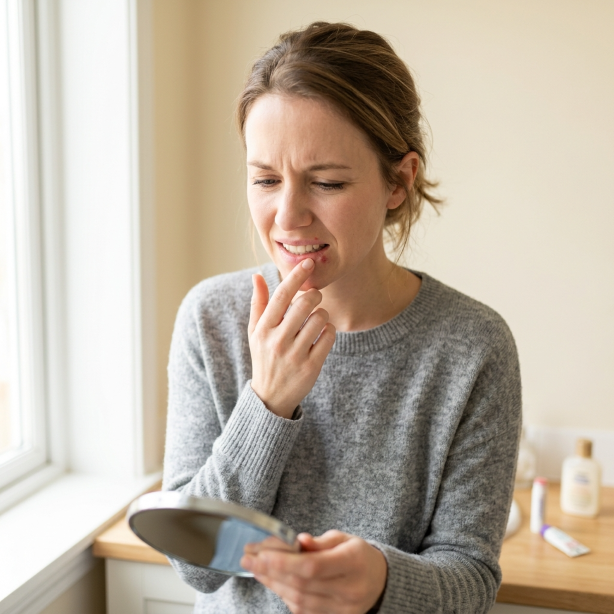
A cold sore is a common viral infection caused by the Herpes Simplex Virus (HSV-1). Cold sores typically appear as small fluid-filled blisters on or around the lips and are often referred to as a cold sore on the lip.
After the initial infection, the virus remains inactive within the body and can reactivate later, causing recurring outbreaks. Common triggers include illness, stress, fatigue, sun exposure, hormonal changes, and trauma to the lips. Although cold sores usually heal on their own, they can be painful, contagious, and frustrating to manage without proper guidance.

What are the types of cold sore infections?
There are three types of oral herpetic infections: Acute Primary Herpetic Gingivostomatitis, Herpes Simlex Labialis and Recurrent Intra-Oral Herpes.
Acute Primary Herpetic Gingivostomatitis
Approximately 1% of initial oral infections with Herpes Simplex Virus manifests as a very visible and acutely symptomatic primary infection. While this infection usually occurs in children, they also occur in adults. Mild forms look like multiple small punctuate shallow ulcers involving both the keratinizing (dorsal surface of the tongue, hard palate and gums) and non-keratinizing (buccal mucosa, ventral and lateral tongue and vestibule) oral mucosal surfaces.
Severe forms may present as large diffuse whitish ulcers that have scalloped borders and erythematous halos. The patient often experiences fever and lymphadenopathy that lasts from 2 to 10 days. The painful ulcers and myalgia make masticating and swallowing difficult. In healthy individuals, these symptoms usually only last 2 to 4 days. However, in an immune-compromised patient an extended period of primary herpetic gingivostomatitis may develop. In these patients, the surface lesions are often larger and deeper than the lesions in healthier patients.
Herpes Simplex Labialis
Recurrent herpes simplex labialis affects the lips and is the most common type of infection. These recurrent lesions are commonly seen after the fragile lips have been manipulated during dental treatment. Lesions on the lips form fluid-filled vesicles that rupture, ulcerate and resolve as crusted brownish lesions.
As it often occurs following an upper respiratory tract infection, it is frequently referred to as a “cold sore”. The herpes simplex virus remains latent in the trigeminal ganglion but can be reactivated by prolonged exposure to sunlight, trauma and manipulation of the lips, fever, immune-suppression, menstruation, stress and anxiety. Patients often report a prodromal phase of tingling in the area in the days before an oral lesion appears. While patients are often uncomfortable from these infections, they usually do not experience concurrent fevers or lymphadenopathy. However, immune-suppressed patients usually experience larger and deeper lesions and have fevers and lymphadenopathy resembling a primary form of the disease.
Recurrent Intra-Oral Herpes
Recurrent intraoral herpes involves the slope of the hard palate or maxillary gingiva. Intraoral lesions differ as they are punctuate with red or white bases.
Think you need a cold sore treatment?
Whether you’re experiencing your first outbreak or dealing with recurring cold sores, our team can help identify the cause and recommend the most appropriate treatment options.

Understanding the stages of a cold sore outbreak
Most cold sore outbreaks follow a predictable cycle from the first warning signs through healing.
Prodrome (tingling stage)
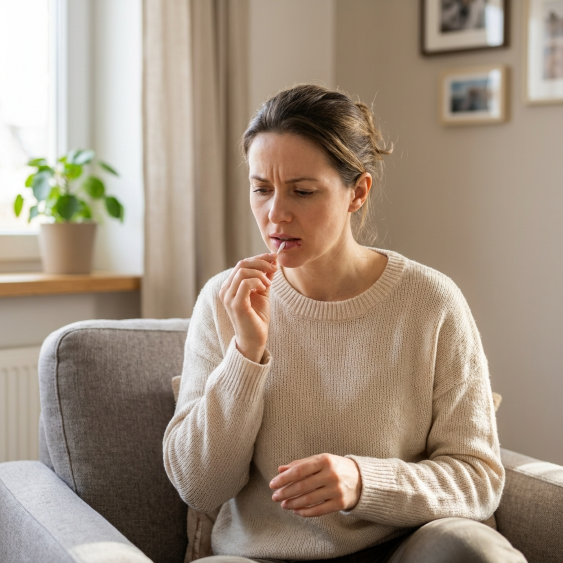
Many people experience tingling, itching, burning, or sensitivity around the lips before a cold sore becomes visible, which is the first warning sign that an outbreak is coming on.
Ulcer stage
At this point, the blister usually ruptures, leaving a painful, reddish ulceration. During this stage the cold sore is most contagious.
Scab and crusting stage
When the ulcer dries, it leaves a scab or crust. Many find this stage painful because smiling, talking and eating can break the scab open. Severe itching and/or burning is also a problem.
Healing stage
The scab gradually disappears and healthy tissue replaces the affected area until the skin returns to normal, leaving some dry flaking and residual swelling.
How can I treat a cold sore?
Patients should be advised that HSV-1 is self-limiting and lesions will heal without treatment. Since oral herpetic infections can be physically and emotionally distressing to patients, treatment goals should include prevention, palliative measures to help minimize symptoms, and medications that may yield a faster healing process and shorter symptom duration.
Preventive measures must include lowering the risk of trauma to the oral mucosa such as the frequent use sunscreen-containing lip balms. If the manipulation of the lips during dental appointments leads to a manifestation of the infection, the dentist may want to consider prescribing an antiviral medication as a prophylactic.
Understanding the differences in OTC products is important. Without the proper information, your patients may suffer in silence or use the wrong product, inadvertently prolonging their outbreak. Health practitioners should explain to their patients that OTC treatments such as lip balms may include moisturizers to prevent cracking and analgesics to relieve comfort, but they have not been proven to shorten the healing period.
Recurrent herpes labialis and recurrent intraoral HSV infections can be treated with various classes of medications:
Over-The-Counter (OTC) Palliative Care Agents
This category of medications relieve symptoms only with no impact on the healing cycle. Examples include topical anesthetics and coating agents (diphenhydramine elixir 12.5mg mixed with kaopectate OTC or Maalox OTC mixed to a 50:50 ratio. Directions are rinse 1tsp for 2min BID and before each meal, and spit out)
OTC Cell-Entry Virus Blockers
This class of medications inhibits penetration of viral DNA into healthy oral mucosal cells. They are the only OTC class to have shown a clinically significant positive impact on shortening the healing cycle.
Prescription Antivirals
These medications inhibit DNA-polymerase in mucosal cells where viral penetration has already occurred. They shorten the healing period.
Healing Patches
These use hydrocolloid technology to form a protective barrier that contains the virus. Not only do they relieve symptoms and have a positive impact on the healing cycle, they also cover herpetic lesions, causing less social embarrassment.
Propolis-based NPH products
These indirectly act as an anti-viral agent by interfering with one of the steps of viral replication. They also help prevent the spread of infection through antibacterial and antifungal effects.
Book a cold sore assessment today
We carefully evaluate oral tissues to identify cold sores and other conditions to design a personalized treatment plan for you.
The Westmount Dental difference
Full service dental office all in one convenient location
Gentle, patient-focused care for a positive experience
Open 7 days a week & extended weekday hours until 7pm
Common questions about cold sores
We’re here to help. Browse the most common questions below, or reach out to our team directly.
Cold sores are caused by the Herpes Simplex Virus (HSV-1). Once infected, the virus remains dormant in the body and may reactivate periodically.
Yes. Cold sores are highly contagious, particularly during the blister and ulcer stages when the virus is actively shedding.
While the virus cannot be eliminated, avoiding triggers, using sun protection, maintaining good health, and seeking early treatment can help reduce outbreaks.
Testimonials
Our Happy Customers
Join thousands of happy patients who trust us for gentle, expert care and beautiful smiles.
Marisa L.
Customer
“My experience at Westmount Dental is extremely satisfying to my needs. I feel that the staff members are very welcoming and I greatly enjoy coming to this office.”
Andy R.
Customer
“A friend informed me that you are open on Sundays. I came to you with one wish, “All I want for Chanukah is my two front teeth (which I cracked).” You fixed it and I became a regular patient. Thank you.”
Katia L.
Customer
“As an Invisalign patient I feel that the treatment was very rewarding. I’m very impressed with my new smile. Dr. Buzaglo, Dr. Bana and the team at Westmount Dental have made me feel good about myself again!”